The World in White Velvet

Nolan O'Connor
| 13-01-2026
 · Science Team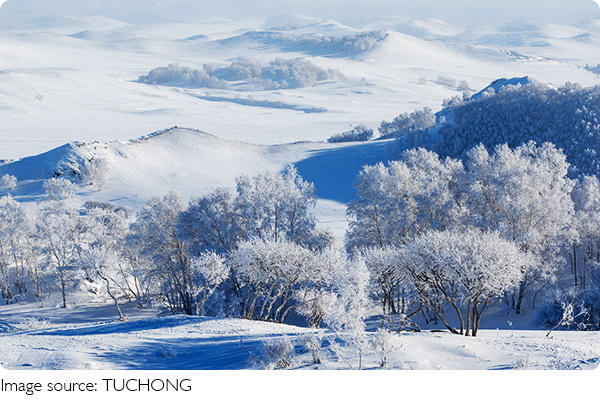
I woke before dawn on a mid-winter hike, my breath fogging in the beam of my headlamp. As the first grey light seeped into the sky, I looked up and froze. Every single branch, twig, and needle of the surrounding pines was coated in a thick, feathery, crystalline white. It wasn't snow.
The forest was utterly silent, sheathed in a breathtaking, alien fur. The air was motionless and bitingly cold. In that moment, I wasn't just in a forest; I was inside a vast, natural art installation made of ice and air.
That's the magic of a rime landscape—a phenomenon as precise in its creation as it is ethereal in its beauty.
The Precise Recipe for Frost Feathers
Rime ice isn't your average morning frost. It forms under a very specific, somewhat rare set of atmospheric conditions. First, you need supercooled water droplets. This means tiny liquid water droplets in fog or low clouds that remain liquid even at temperatures well below freezing (often between 0°F and -20°F or -18°C to -29°C). Second, you need a persistent, freezing fog—not just cold air. This fog provides the continuous supply of those supercooled droplets. Third, you need a significant and constant wind. This is the master sculptor. As the wind drives the supercooled fog past a solid object like a tree branch, fence post, or even a hiking boot left outside, the droplets instantly freeze on contact. They don't have time to spread out into clear ice. Instead, they trap tiny air pockets, creating that distinctive, opaque, white, granular texture. The wind direction determines the growth; rime always forms on the windward side, building elaborate, feathery structures that can grow inches or even feet long over hours, pointing like frozen fingers into the gale.
Where the Ghost Forests Grow
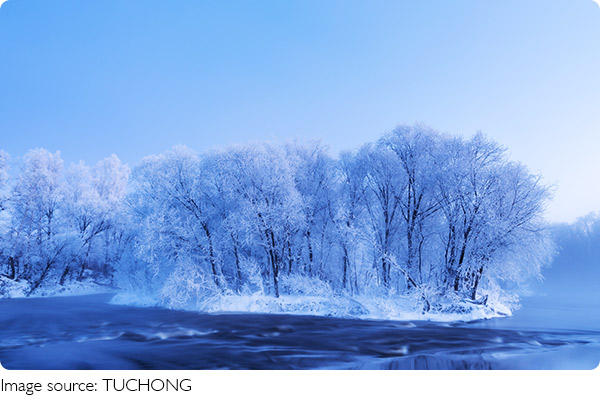
While you might see rime on a mailbox, true rime landscapes—where the phenomenon dominates the visual field—occur in specific, often dramatic, geographic contexts. The most iconic are high-altitude summit ridges. Mountains that poke into a consistent cloud layer, like certain peaks in the Alps or the Rockies, can be plastered with dense rime for days, creating surreal, frozen worlds where every rock and signpost is transformed. Another prime location is along wind-swept coastal zones in polar or subpolar regions. When relatively warmer, moist sea fog encounters cold Arctic air blowing off the land, it creates perfect conditions for maritime rime, coating entire shorelines and creating "ice forests" on coastal bluffs. A more subtle but equally beautiful setting is within high-elevation coniferous forests, often called "frost forests." Here, the fog settles in the trees, and the intricate structure of needles and twigs provides countless surfaces for the rime to cling to, creating that profound, silent, white-on-green cathedral effect.
A Landscape of Ephemeral Extremes
Experiencing a rime landscape is to witness an environment of profound contradiction and fragility. The eerie, absolute silence is its most striking feature. The thick coating of ice dampens all sound; you hear only your own heartbeat and breath. Visually, it creates extreme contrast and texture. The delicate, furry white ice against the dark, angular shapes of bark and rock is a photographer's dream, highlighting forms and lines normally invisible. Yet, this beauty is intensely fragile and transient. The entire scene is hostage to the temperature.
A slight warming, a shift in the wind, or the emergence of the sun acts like a switch. The rime doesn't melt into water; it sublimates—turning directly from solid ice into water vapor. It can vanish in minutes, the ghostly sculptures disappearing without a trace, leaving only dripping branches as evidence of their fleeting visit.
To walk in a rime landscape is to be granted a ticket to a show that nature puts on only when the backstage elements align perfectly. It teaches you to appreciate not just grandeur, but delicacy; not just permanence, but the breathtaking art of the momentary. It's a reminder that some of the world's most stunning beauty isn't carved in stone, but whispered into existence on a breath of frozen wind, waiting for anyone willing to venture into the cold, quiet dawn to see it. The memory of that white velvet world, I've found, stays with you long after the ice has returned to the sky.