Eyes Above the Field
Nolan O'Connor
| 13-01-2026
 · Science Team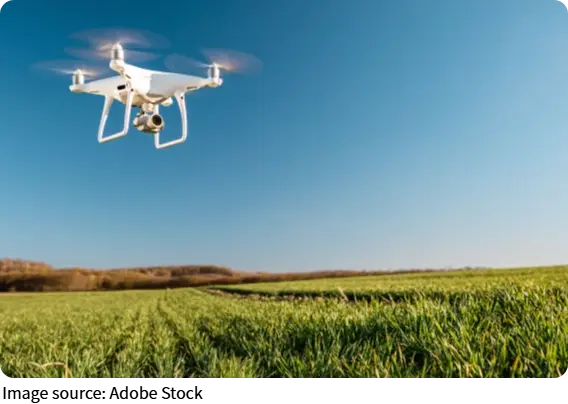
I was visiting a friend's family farm last spring, expecting to see tractors kicking up dust. Instead, I found him in the farm office, staring at a tablet displaying a vivid, multi-colored map of his wheat field. "See this red patch?" he said, zooming in. "Nitrogen deficiency.
The drone caught it yesterday. I'm sending a sprayer only there today." That moment wasn't just about cool tech; it was a quiet revolution.
Agricultural drones have moved far beyond simple flying cameras—they're becoming the central nervous system of a smarter, more precise, and more sustainable form of farming.
From Pictures to Prescriptions: The Data Pipeline
The core value of a farm drone isn't the flight, but the data it captures and how that's translated into action. It starts with multispectral and thermal sensors. These specialized cameras see far more than the human eye. They detect subtle differences in how plants reflect light, creating maps that highlight variations in chlorophyll content (indicating health), water stress, and nutrient levels. This raw data is then processed by agronomy software platforms. These programs use algorithms to stitch images together, analyze the patterns, and generate clear prescription maps. Finally, these maps are fed into variable-rate application (VRA) systems in tractors or sprayers. This allows farmers to apply seed, fertilizer, or pesticide only where it's needed, and in the exact amount required, moving from blanket coverage to surgical treatment. This data pipeline—capture, analysis, action—turns a field from a uniform plot into a mosaic of micro-management zones.
Practical Applications Beyond Aerial Photography
The applications of this technology are concrete and measurable. One of the most powerful is early pest and disease detection. A drone with a thermal sensor can identify a fungal infection in a crop before it's visible to the eye, as stressed plants have a different temperature signature. This allows for targeted intervention, potentially saving an entire yield. Another critical use is precision planting and stand assessment. After planting, drones can quickly fly over and count seedlings, identifying gaps or poor germination zones. This data can inform decisions about replanting specific areas, optimizing seed use and final plant population. Furthermore, drones are invaluable for irrigation management. By creating detailed elevation models and identifying areas of pooling or poor drainage, farmers can design and adjust irrigation systems with pinpoint accuracy, conserving vast amounts of water and improving crop uniformity.
The Economic and Environmental Calculus
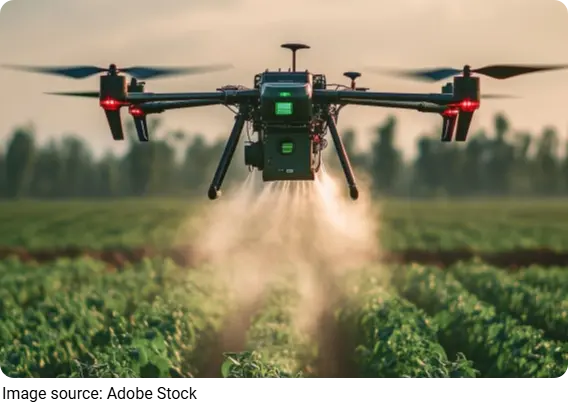
Adopting drone technology is a business decision with a compelling return on investment, both financially and ecologically. On the cost side, the savings are direct. Precise input application means less money spent on excess fertilizer, chemicals, and seed. Scouting efficiency is another major factor; a drone can survey a 100-acre field in minutes, replacing hours of manual labor. The environmental benefits are intrinsically linked. Reduced chemical runoff from targeted spraying protects local waterways and soil health. Optimized water use alleviates pressure on aquifers and rivers. Enhanced soil health results from less compaction, as heavy machinery makes fewer passes over the land. This creates a powerful virtuous cycle: good stewardship of the land becomes synonymous with smart economics, aligning the farmer's bottom line with the long-term health of the ecosystem.
So, the next time you see a drone humming quietly over a field, don't just see a gadget. See a flying laboratory, a data scout, and a precision tool all in one. It represents a fundamental shift from farming by the acre to farming by the square foot. This technology isn't about replacing the farmer's intuition; it's about augmenting it with a depth of knowledge that was previously impossible. The future of agriculture is taking shape not just in the soil, but in the streams of data flowing from the sky, helping growers make decisions that are better for their crops, their wallets, and the land they steward.